


 English

Flexible Aluminum Busbar

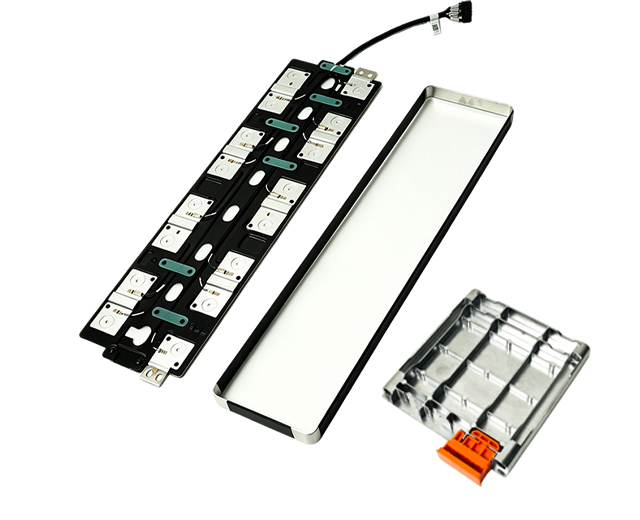
The Cell Contact System (CCS), also referred to as a battery cell contacting system or cell contacting system, is an advanced electrical and structural integration solution used in electric vehicle (EV) battery packs, energy storage systems (ESS), and high-performance industrial battery modules.
It is designed to connect individual battery cells, collect electrical signals, and ensure safe and efficient communication between cells and the Battery Management System (BMS).
In modern battery architecture, especially in cell-to-pack (CTP) and high-density module designs, the CCS plays a critical role in improving system integration, reducing assembly complexity, and enhancing overall battery performance.
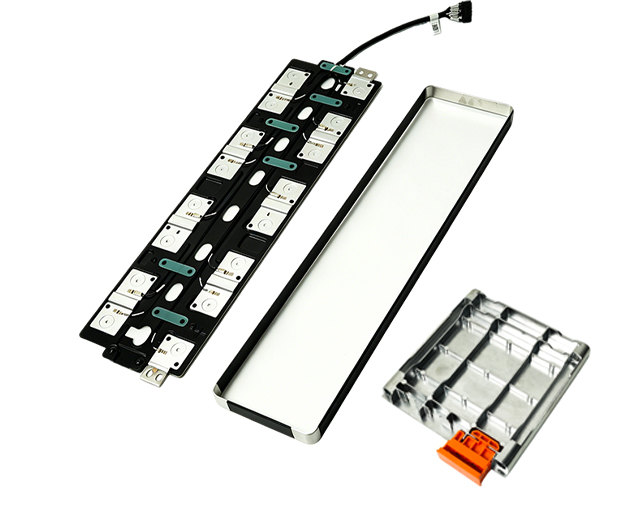
The cell contact system is not just a simple connector. It is a multifunctional system that integrates:
Electrical interconnection between cells
Voltage sampling and signal transmission
Thermal monitoring (optional integration)
Structural support for battery module assembly
In other words, the CCS acts as a central nervous system inside the battery pack, enabling both energy flow and information feedback.
One of the primary functions of the battery cell contacting system is to connect multiple battery cells in series or parallel.
This is achieved through different Busbar technologies, including:
Copper Busbar – high conductivity, low resistance, ideal for high-current applications
Aluminum Busbar – lightweight and cost-effective alternative
Flexible Busbar – suitable for vibration-resistant and space-limited designs
Solid Busbar – stable structure for fixed battery module layouts
These busbars ensure stable current flow and minimize energy loss during operation.
A key feature of the cell contact system (CCS) is precise voltage sensing.
Each cell’s voltage is collected through sensing lines or flexible circuits such as:
FPC (Flexible Printed Circuit)
Sense harness wires
The collected data is transmitted to the Battery Management System (BMS), which performs:
State of Charge (SOC) estimation
Cell balancing
Overvoltage/undervoltage protection
System diagnostics
This function is essential for maintaining battery safety and extending lifespan.
In advanced battery cell contacting systems, temperature sensors (NTC thermistors) can be integrated directly into the structure.
This allows real-time monitoring of:
Cell temperature distribution
Thermal runaway risk prevention
Cooling system coordination
It is especially important in EV battery packs and high-energy ESS systems.
Beyond electrical functions, the CCS also provides mechanical support through:
Insulating carriers or frames
Positioning structures for cells
Fixation of busbars and FPC layers
This ensures that the battery pack remains stable under vibration, expansion, and thermal cycling.
A complete cell contact system (CCS) typically includes:
Busbar system (Copper Busbar / Aluminum Busbar / Flexible Busbar / Solid Busbar)
Flexible Printed Circuit (FPC) for signal routing
Cell sensing harness (voltage detection wires)
Insulation carrier / plastic frame
Connectors for BMS interface
Thermal sensors (NTC, optional)
These components are integrated into a compact, pre-assembled system for easier battery module manufacturing.
It is important to understand the difference between a busbar and a cell contact system:
Only responsible for electrical conduction
No sensing or communication function
Single-purpose component
Electrical conduction
Voltage sensing
Temperature monitoring
Structural integration
BMS communication interface
Therefore, the CCS is a system-level solution, not just a conductive part.
The battery cell contacting system is widely used in:
Electric Vehicle (EV) battery packs
Hybrid electric vehicle (HEV) systems
Energy Storage Systems (ESS)
Industrial lithium battery modules
High-voltage power battery systems
Renewable energy storage (solar / wind systems)
It is especially important in next-generation high-density battery architectures.
Some advanced designs such as the volfinity cell contacting system focus on:
Modular integration
Simplified assembly processes
High scalability for mass production
Reduced wiring complexity
Improved reliability in large battery packs
This concept is widely used in modern EV battery platform designs.
With the rapid development of EV and energy storage technologies, batteries are moving toward:
Higher energy density
Faster charging speeds
More compact structures
Greater safety requirements
The cell contact system (CCS) enables these advancements by combining Busbar technology + sensing + structural integration into a single optimized solution.
It reduces assembly time, improves reliability, and supports advanced Battery Management System (BMS) functions.
The cell contact system (CCS) is a critical innovation in modern battery engineering. It integrates multiple functions including electrical connection, signal acquisition, and structural support, making it far more advanced than traditional busbar systems.
Whether using copper busbar, aluminum busbar, flexible busbar, or solid busbar, the CCS ensures stable performance and intelligent battery management in EV and energy storage applications.
The cell contact system (CCS) is an integrated battery component used in EV battery packs and energy storage systems. It connects individual cells electrically, collects voltage signals, and supports communication with the Battery Management System (BMS). It is more advanced than a traditional busbar because it also includes sensing and structural functions.
A busbar (such as copper busbar or aluminum busbar) is mainly used for electrical conduction. In contrast, a cell contact system integrates multiple functions, including:
Electrical connection
Voltage sensing
Temperature monitoring (optional)
Structural integration
Busbars are only one part of the CCS system.
A typical battery cell contacting system may include:
Copper busbar or aluminum busbar
Flexible busbar or solid busbar
FPC (flexible printed circuit)
Sense wires or harness
Insulation frame or carrier
Connectors for BMS interface
Temperature sensors (NTC, optional)
The cell contacting system is widely used in:
Electric vehicle (EV) battery packs
Energy storage systems (ESS)
Hybrid electric vehicles (HEV)
Industrial lithium battery modules
High-voltage battery systems
Compared with traditional busbar-only solutions, the cell contact system offers:
Higher integration level
Improved safety and reliability
Accurate voltage and temperature monitoring
Reduced wiring complexity
Easier battery pack assembly
Better support for BMS management
Common busbar types used in cell contact systems include:
Copper busbar – high conductivity and performance
Aluminum busbar – lightweight and cost-efficient
Flexible busbar – vibration-resistant and space-saving
Solid busbar – stable and durable structure
A volfinity cell contacting system refers to an advanced modular CCS concept designed for high scalability and simplified assembly. It reduces wiring complexity while improving integration efficiency in large EV battery packs.
Yes. The battery cell contacting system can be customized based on:
Battery module design
Cell type and arrangement
Voltage and current requirements
BMS communication needs
Structural constraints
Yes. When combined with copper busbar or optimized aluminum busbar designs, the cell contact system can support high-current EV and ESS applications with stable thermal and electrical performance.
Modern battery systems require higher energy density and smarter control. The cell contact system (CCS) enables this by combining power transmission and intelligent monitoring into one integrated structure, improving both performance and safety.

Copyright © 2026 G AND N FORTUNE LIMITED All rights reserved.