


 English

Flexible Copper Busbar
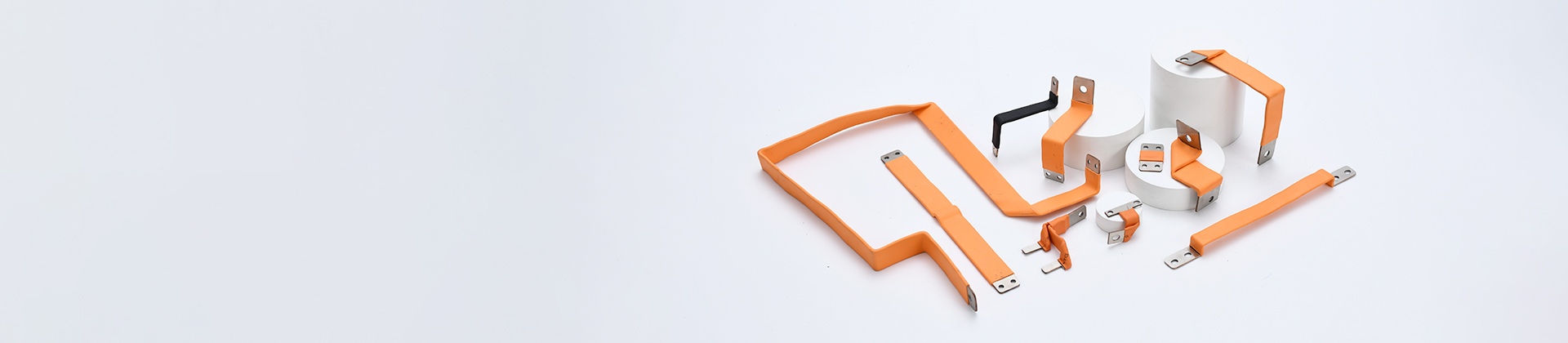
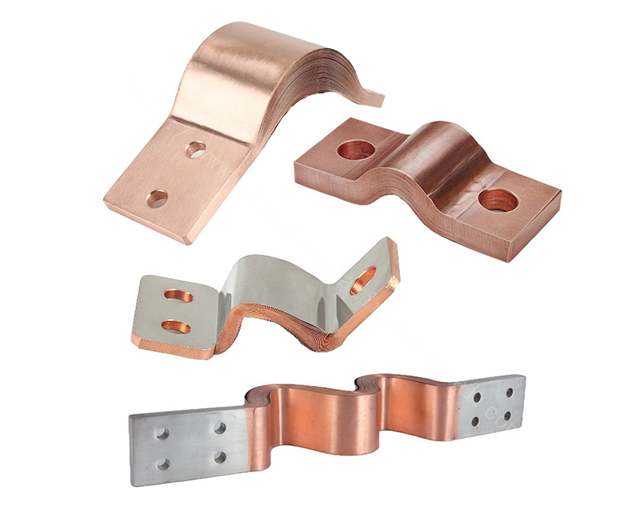
Copper Laminated Busbars are advanced electrical conductors designed for high-performance power distribution in compact and flexible systems. Also known as laminated Flexible Busbars or laminated Copper Busbars, these components are composed of multiple thin copper layers (0.1mm–0.5mm thick) bonded together with high-quality insulating materials. This unique layered construction combines copper’s excellent electrical conductivity (≈58 MS/m at 20°C) with outstanding mechanical flexibility, enabling bending radii as low as 10× the busbar thickness without damage.
Laminated busbars are widely used in applications where space, weight, and efficiency are critical, such as electric vehicles, renewable energy systems, data centers, aerospace, and industrial power distribution.
A copper busbar is a key electrical component that distributes electrical power efficiently across circuits. Compared to traditional round conductors, copper laminated busbars:
Support higher current capacities (100A–5000A) with current densities up to 10A/mm².
Maintain low voltage drop and minimal resistive losses.
Improve mechanical flexibility for tight spaces and dynamic applications.
Offer weight reduction of up to 70% over rigid busbars.
Provide enhanced thermal management with temperature rise under 50°C during normal operation.
These features make laminated Flexible Busbars the preferred choice for modern electrical systems requiring compact, high-current, and lightweight solutions.
The busbar lamination process involves several precise manufacturing steps:
Copper Foil Lamination: Thin copper foils are stacked and laminated under heat and pressure to form multi-layered sheets.
Insulation Bonding: Layers are separated by insulating materials to ensure electrical isolation and prevent short circuits.
Cutting and Forming: Laminated sheets are cut and shaped into busbars using bending and forming techniques optimized for flexibility.
Surface Treatment: Edges and terminals are often tin or silver plated to enhance corrosion resistance and solderability.
Testing and Quality Control: Each busbar undergoes conductivity tests, insulation resistance checks, flex endurance cycles, and thermal performance assessments.
This rigorous process ensures high-quality electrical copper bus bars suitable for industrial, automotive, and aerospace applications.
Flexible laminated busbars have diverse applications:
Electric Vehicles (EV) & Hybrid Systems: Connect battery modules with ultra-low contact resistance (<10 μΩ), reducing heat and losses.
Renewable Energy Systems: Used in solar inverters and DC connections up to 1000V, reducing EMI by 20–30 dB.
Industrial Power Distribution: Switchgear and motor control centers requiring short-circuit ratings up to 100kA.
Aerospace & Defense: Lightweight and shock-resistant busbars for avionics and defense systems.
Data Centers: High-current 48V DC busways for minimal voltage drop and high efficiency.
Electrical Conductivity: ≥98% IACS, resistivity 1.724 μΩ·cm at 20°C.
Current Capacity: 2–3× more than equivalent round conductors.
Mechanical Flexibility: Over 100,000 flex cycles at minimum bending radius with <5% resistance increase.
Voltage Rating: Typically 600V–1000V systems, insulation resistance >1000 MΩ.
Thermal Performance: Heat dissipation up to 1.5 W/cm², maintaining safe operating temperatures.
Corrosion Resistance: Tin or silver plating on contact areas.
EMI Reduction: Laminated layers reduce electromagnetic interference in sensitive applications.
Weight Reduction: Up to 70% lighter than rigid Copper Busbars of equivalent capacity.
G and N Fortune Limited is a leading copper laminated busbar manufacturer, offering:
Tailored Solutions: Custom sizes, layer counts, and insulation materials.
Advanced Manufacturing: Precision lamination and forming for consistent quality.
Comprehensive Testing: Electrical, mechanical, and thermal performance guaranteed.
Global Compliance: UL, CE, RoHS, MIL-STD certified products.
Industry Expertise: Supplying EV, renewable energy, aerospace, data center, and industrial sectors.
Technical Support: Dedicated engineering assistance for design optimization and troubleshooting.
Q1: What are laminated busbars?
A1: Laminated busbars are multi-layered copper conductors separated by insulating materials, designed for flexible, compact, and high-current applications.
Q2: What is the purpose of a copper busbar?
A2: To efficiently distribute electrical power across circuits while minimizing losses, improving thermal management, and reducing system weight.
Q3: What is the best material for a busbar?
A3: High-conductivity copper (≥98% IACS) is preferred due to its low resistivity, excellent thermal performance, and mechanical strength.
Q4: How flexible are laminated busbars?
A4: They can endure over 100,000 flex cycles at a minimum bending radius of 10× thickness without significant resistance increase.
Q5: What current capacities can laminated flexible busbars handle?
A5: From 100A up to 5000A, with current densities reaching 10A/mm², outperforming equivalent round conductors.
Q6: Are these busbars suitable for EV battery packs?
A6: Yes, they are widely used in electric vehicles and hybrid systems for low-resistance battery interconnections.
Q7: What materials and coatings are used?
A7: Copper layers laminated with insulating materials; terminals are tin or silver plated for corrosion resistance.

Copyright © 2026 G AND N FORTUNE LIMITED All rights reserved.