


 English

Blog

2025-12-10 10:15:15
In modern electrical systems, bus bars play a critical role in distributing power safely and efficiently. However, because copper and aluminum conduct electricity so effectively, proper insulation is essential to prevent short circuits, arc faults, and accidental contact. This guide explains how to insulate bus bar, the common materials used, insulation methods, key precautions, and suitable application scenarios.
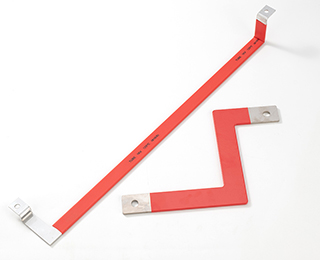
An insulate bus bar refers to a copper or Aluminum Busbar that has been covered with a protective, non-conductive layer. The purpose of bus bar insulation is to:
Prevent electrical shock
Avoid short circuits or phase-to-phase faults
Improve system safety and reliability
Enhance resistance to moisture, dust, and corrosion
Enable more compact electrical designs
Insulation is essential for all types of conductors, including Insulated Copper Busbar, Insulated Aluminum Bus Bar, Insulated Flexible Busbar, and Solid Insulated Busbar.
When selecting busbar insulation material, buyers usually choose based on operating voltage, temperature, chemical exposure, and environmental conditions. The most widely used materials include:
Polyolefin heat shrink
Easy to apply with hot-air gun
Excellent for copper busbar insulation
Provides waterproof and abrasion-resistant finish
High dielectric strength
Suitable for complex shapes
Durable, long-term protection
Used in switchgear and high-voltage equipment
Low cost
Good electrical insulation
Suitable for indoor environments
Used for Insulated Flexible Copper Bars and Insulated Flexible Busbars
Allows easy bending while maintaining safety
Used in high-temperature or fire-resistant applications
Depending on system design, select:
Copper busbar (high conductivity, premium systems)
Aluminum Busbar (lightweight, cost-effective)
Flexible busbar (laminated or braided, adaptable layouts)
Solid Busbar (rigid and durable for switchgear or distribution panels)
Remove:
Oxidation
Oil
Dust
Burrs
This ensures stronger adhesion for coatings or insulation sleeves.
Different insulation types require different steps:
Cut tubing to the correct length
Slide tubing over the bus bar
Heat evenly with a hot-air gun
Allow to cool before installation
Clean and degrease
Spray or dip coat the busbar
Cure in an oven at required temperature
Inspect thickness and uniformity
Wrap evenly with 50% overlap
Use heat-resistant tape for high-temperature systems
Place the busbar into mold
Inject epoxy resin
Cure and demold
Inspect dielectric strength
Test items may include:
Dielectric withstand voltage
Insulation resistance
Partial discharge
Mechanical adhesion
Ensure insulation material matches the working temperature.
Avoid air bubbles or gaps during coating.
Do not overheat heat-shrink tubing.
Follow electrical clearance and creepage distance standards.
Maintain uniform insulation thickness for safety.
Use busbar protection systems (covers, barriers) in high-risk areas.
Insulated busbars are widely used in:
Low-voltage and high-voltage switchgear
Data centers and energy storage systems
UPS cabinets
Battery packs (EV, solar, ESS)
Industrial electrical panels
Marine and railway power systems
Renewable energy inverters and transformers
Where compact design and high safety are required, insulated copper busbar, Insulated Aluminum Busbar, and Insulated Flexible Busbars are essential.
Improved electrical safety
Higher reliability in harsh environments
Reduced risk of arc flash
Better thermal performance
Space-saving installation
Extended service life

Copyright © 2026 G AND N FORTUNE LIMITED All rights reserved.