


 English

Blog

2025-12-10 11:39:38
Determining what size wire from battery to busbar is essential for ensuring safe, efficient, and reliable electrical connections in battery-powered systems. Choosing the correct wire gauge prevents overheating, voltage drop, and potential hazards while maintaining system performance.
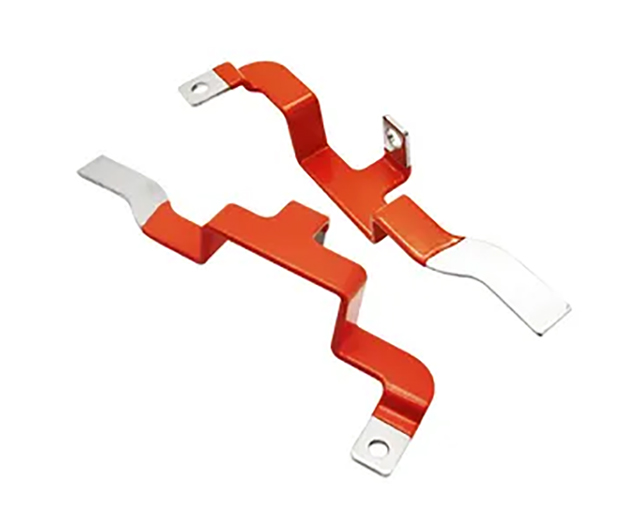
A busbar is a metallic strip or bar that distributes electrical power to multiple circuits or devices. Connecting a battery to a busbar requires a wire capable of safely carrying the full load current from the battery to the busbar. The connection is critical in systems such as:
12V Battery Bus Bar for automotive or marine applications
48V battery bus bar for renewable energy storage or UPS systems
EV battery busbar in electric vehicles
Industrial battery bus bar connections
Several factors determine the proper wire size between a battery and busbar:
Current Rating (Amperage)
Calculate the maximum continuous current drawn from the battery.
Consider peak currents for transient loads.
Voltage Drop
Minimize voltage drop to maintain efficient system performance.
Acceptable voltage drop typically ranges from 2–5% depending on system sensitivity.
Wire Material
Copper Battery Bus Bar connections typically use copper wires due to high conductivity.
Aluminum wires are sometimes used for lightweight applications but require a larger cross-section.
Wire Length
Longer distances increase resistance and voltage drop, requiring larger wire sizes.
Environmental Factors
High temperatures, exposure to sunlight, or confined spaces may necessitate insulation with higher temperature ratings.
Identify the maximum current the battery will supply to the busbar.
For 12V or 48V systems, keep voltage drop below 3–5% for efficiency.
A simplified formula for voltage drop:
A=ΔV2⋅L⋅I⋅K
Where:
A = Wire cross-sectional area (mm²)
L = One-way wire length (meters)
I = Current (Amps)
K = Conductivity constant (copper = 56, aluminum = 35)
ΔV = Acceptable voltage drop (Volts)
Round up to the nearest standard wire gauge that meets or exceeds the calculated area.
Use stranded wire for flexibility in battery busbar connections.
Choose Compatible Wire and Connector
Ensure wire gauge matches calculated requirements.
Use lugs or busbar connectors designed for battery bus bar connections.
Prepare Wire
Strip insulation to the appropriate length.
Crimp or solder the wire securely.
Attach to Busbar
Use bolts, screws, or specialized copper busbar connectors.
Tighten connections to recommended torque to prevent loosening or arcing.
Insulate and Protect
Use heat shrink tubing, PVC sleeves, or other insulating materials to prevent accidental short circuits.
Avoid undersized wires to prevent overheating.
Use wires with proper insulation rating for system voltage.
Keep connections clean and free of corrosion, especially for copper battery bus bars.
Verify polarity before connecting to prevent damage to equipment.
Follow local electrical codes for battery installations.
Automotive and Marine Systems: Connecting 12V battery bus bar to starter, fuse blocks, or distribution panels.
Renewable Energy Systems: 48V battery bus bar connections for solar storage systems or hybrid power systems.
Electric Vehicles (EVs): Battery busbar connections for high-current EV battery packs.
Industrial UPS and Backup Systems: Connecting large battery banks to power distribution busbars.
Selecting the correct wire size from battery to busbar is crucial for safety, efficiency, and long-term reliability. By considering current, voltage drop, wire material, length, and environmental conditions, engineers and system integrators can ensure optimal performance for battery busbar connections. Using proper copper battery bus bar, Flexible Busbar, or Aluminum Busbar wiring guarantees minimal resistance, reduced heat, and enhanced system safety.

Copyright © 2026 G AND N FORTUNE LIMITED All rights reserved.