


 English

Blog

2025-12-11 16:56:33
A busbar is a metallic strip or bar, typically made of copper or aluminum, used to carry large currents in electrical systems. Unlike regular cables, a busbar has a flat, wide, and thick structure that allows it to handle high currents with minimal energy loss. Busbars are widely used in:
Power distribution systems
Electrical switchgear
Industrial machinery
Battery packs
Renewable energy systems
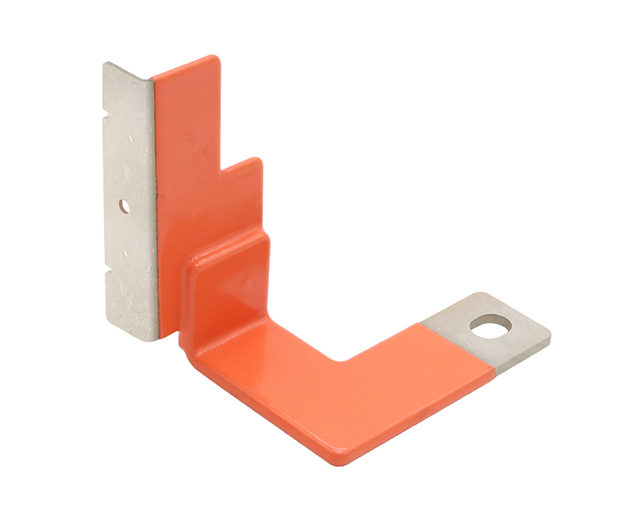
The main functions of a busbar include:
Electrical Current Distribution
Busbars distribute current from a single input to multiple outputs efficiently.
They are used to connect transformers, generators, or batteries to circuits.
Reducing Electrical Losses
Compared to multiple individual wires, busbars reduce resistance and voltage drops.
Simplifying Electrical Layouts
Using a busbar minimizes the number of wires, reducing complexity and installation time.
Supporting High Current Loads
Busbars, especially copper busbars or Power Copper Busbars, can carry hundreds to thousands of amperes without overheating.
Enhancing System Reliability
Busbars allow centralized management of current flow, making protection and monitoring easier.
A busbar works by providing a low-resistance path for electrical current. The electrical current flows uniformly along the metallic strip, distributing power to connected circuits or devices. Depending on the system, busbars can be:
Single-phase or multi-phase in distribution boards
Flexible or rigid for adapting to installation requirements
Insulated to prevent accidental contact and short circuits
High-quality busbars, such as Custom Busbars or Power Copper Busbars, are designed to withstand thermal expansion, mechanical stress, and high-current loads, ensuring long-term reliability.
There are several types of busbars commonly used in electrical systems:
Copper Busbar
Excellent conductivity
Suitable for high-current applications
Often used in industrial switchgear, battery packs, and power distribution units
Aluminum Busbar
Lightweight and cost-effective
Ideal for low to medium-current applications
Often used in renewable energy systems or lightweight power distribution setups
Made of braided copper or laminated strips
Accommodates vibration, movement, or thermal expansion
Used in EV battery packs, UPS systems, and dynamic machinery
Rigid and robust
Handles extremely high currents
Used in industrial switchgear and high-power distribution panels
Insulated Busbars
Coated with epoxy, PVC, or other insulating materials
Prevents accidental contact and short circuits
Common in control panels, battery packs, and enclosed switchgear
Busbars are versatile components, used across multiple industries:
Power Distribution Systems: Connecting transformers, generators, and switchgear.
Battery Storage Systems: Electrical bus bar and flexible busbar connections in large battery banks.
Industrial Equipment: High-current distribution in machinery and motor control centers.
Renewable Energy: Aluminum busbar and copper busbar connections in solar and wind installations.
Electric Vehicles: Flexible Copper Busbar for battery modules and solid copper busbar for main power distribution.
Efficient Current Distribution
Reduces losses and maintains stable voltage across circuits.
Compact and Organized Layout
Minimizes cabling complexity and installation space.
High Reliability and Safety
With insulated busbars or high-quality Custom Busbars, accidental short circuits and failures are minimized.
Adaptable for High Currents
Power Copper Busbars and solid busbars can handle very high amperages safely.
Flexibility for Design
Flexible busbars allow customized shapes and layouts for complex systems.
Understanding what a busbar does is essential for designing safe and efficient electrical systems. Busbars, including copper busbar, aluminum busbar, flexible busbar, solid copper busbar, insulated busbars, and Custom Busbars, provide high-current capacity, reduce energy losses, simplify wiring, and enhance system reliability. Whether used in industrial power distribution, renewable energy systems, or EV battery packs, busbars remain a critical component in modern electrical engineering.

Copyright © 2026 G AND N FORTUNE LIMITED All rights reserved.