


 English

Blog

2025-12-11 17:20:59
Inspecting busbar dimensions is a crucial step in ensuring the safety, reliability, and efficiency of electrical systems. A busbar is a metallic strip or bar, usually made of copper or aluminum, used to conduct large currents in power distribution, industrial equipment, battery systems, and renewable energy installations.
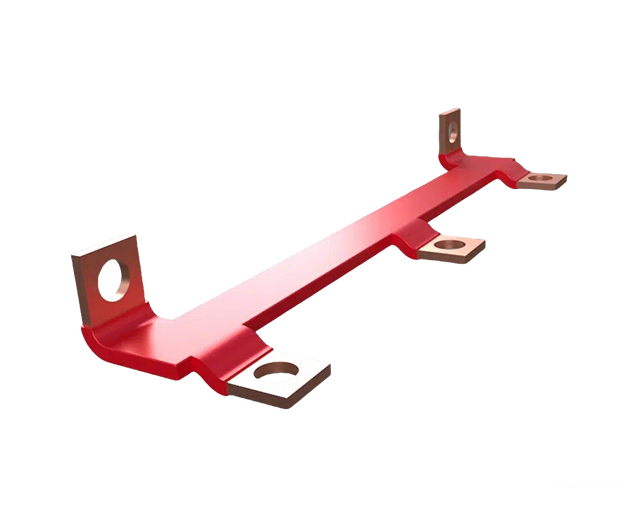
The dimensions of a busbar directly affect:
Current carrying capacity – Thicker or wider busbars can carry higher currents with less voltage drop.
Mechanical stability – Accurate dimensions prevent bending, warping, or stress at connection points.
Compatibility – Ensures proper fit with enclosures, busbar supports, connectors, and mounting holes.
Safety – Correct spacing and insulation prevent short circuits and electrical hazards.
Incorrect dimensions can lead to overheating, system failures, or safety risks. Therefore, inspecting busbar dimensions is a critical part of quality control for custom busbars, Flexible Copper Busbars, Solid Copper Busbars, and power copper busbars.
Several tools are commonly used to measure and inspect busbar dimensions:
Calipers and Vernier Calipers
Measure width, thickness, and small features with high accuracy.
Suitable for both copper busbar and aluminum busbar inspection.
Micrometer / Thickness Gauge
Provides precise thickness measurement, essential for calculating current-carrying capacity.
Coordinate Measuring Machine (CMM)
For complex or large busbars, a CMM ensures accurate 3D measurement.
Ruler or Tape Measure
Quick measurement for long busbars or less critical tolerances.
Template or Gauge
Pre-fabricated templates can verify hole spacing, mounting positions, or cutout alignment.
Laser Measurement Tools
Non-contact method for high-precision inspection of length, width, or flatness.
Use calipers or measuring tape to verify that the busbar meets specified length and width.
Use a micrometer or thickness gauge.
Confirm uniform thickness along the entire busbar.
Verify that mounting holes or connection points align with design specifications.
Ensure correct hole diameter for bolts or connectors.
Lay the busbar on a flat surface or use a straightedge.
Ensure no warping, bending, or twisting that could impact installation or electrical contact.
Compare measurements against design drawings and manufacturer tolerances.
This is particularly important for Flexible Busbars, Solid Busbars, and insulated busbars used in high-current applications.
Clean the Busbar Before Inspection
Remove oil, dust, or oxidation for accurate measurement.
Use Proper Tools for Busbar Material
Copper and aluminum require different handling to avoid scratches or deformation.
Measure at Multiple Points
Check several points along the length and width to detect inconsistencies.
Document Measurements
Record all data for quality control and traceability.
Inspect After Fabrication and Before Installation
Ensures that any dimensional deviations are caught before connecting to electrical bus bar systems or battery busbars.
Industrial Power Distribution: Ensures solid copper busbars and aluminum busbars fit switchgear and panel enclosures.
Battery Systems: Critical for flexible copper busbars and battery busbar connectors in EVs or renewable energy storage.
Custom Busbar Manufacturing: Dimension inspection verifies precise fabrication of custom busbars for specialized projects.
Electrical Panel Maintenance: Regular inspection maintains safety and performance of insulated busbars and electrical bus bars.
Proper inspection of busbar dimensions is essential for reliable electrical performance, safety, and mechanical stability. Using the right tools, methods, and precautions ensures that copper busbar, aluminum busbar, flexible busbar, solid busbar, electrical bus bar, insulated busbars, and custom busbars meet design requirements and are safe for installation. Regular dimension checks are a key part of quality control in industrial, renewable energy, battery storage, and power distribution systems.

Copyright © 2026 G AND N FORTUNE LIMITED All rights reserved.