


 English

Blog

2026-01-14 17:09:53
In modern electrical and EV systems, efficient and reliable power distribution is essential. Two commonly used components for connecting high-current circuits are busbar connectors and braided busbars. Understanding the difference between a busbar connector and a braided busbar is crucial for engineers, OEMs, and system designers. This article explores their definitions, functions, materials, applications, and how they complement each other in power systems.
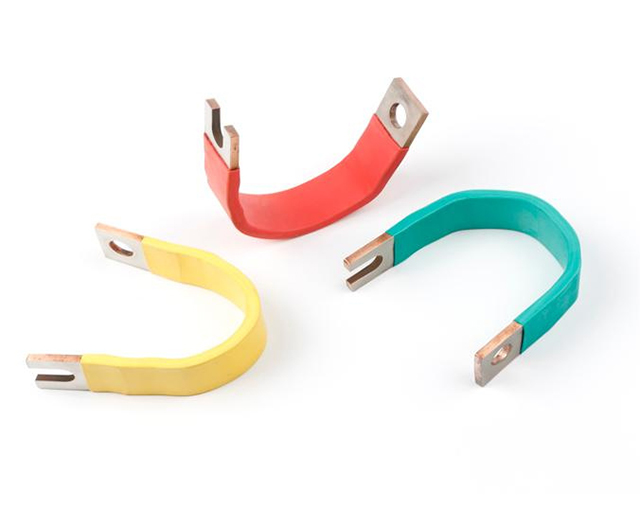
A busbar connector is a device designed to securely join one or more busbars or electrical circuits, providing a reliable electrical bus connector for high-current applications. These connectors are widely used in industrial power distribution, EV battery systems, UPS, and other high-power electronics.
Key features of busbar connectors:
Provide stable electrical busbar connections
Can be rigid or flexible depending on design
High current handling capability
Used for EV Copper Busbar Connector and Copper Busbar connector applications
How to Make a Busbar Connector:
Material Selection: Choose high-purity copper or aluminum for excellent conductivity.
Shaping and Cutting: Cut to precise dimensions for proper fit with the busbar.
Surface Treatment: Apply plating such as tin, nickel, or silver to reduce oxidation.
Assembly: Use bolts, clamps, or welding to connect busbars securely.
Testing: Ensure electrical continuity, insulation, and current handling meet standards.
A braided busbar is a type of flexible conductor made by weaving multiple strands of copper or aluminum. These busbars are designed to carry high currents while allowing flexibility to accommodate vibration, thermal expansion, or movement within the system.
Key types:
Copper braided busbar – widely used for high conductivity and durability
Flexible braided busbar – absorbs mechanical stress, ideal for EVs and battery connections
Advantages of Braided Busbars:
High flexibility for dynamic systems
Reduces mechanical stress on connections
Maintains stable current flow under vibration or thermal cycling
| Feature | Busbar Connector | Braided Busbar |
|---|---|---|
| Function | Joins busbars or circuits | Acts as a flexible conductor itself |
| Structure | Rigid or slightly flexible metal connector | Multi-strand woven copper or aluminum conductor |
| Installation | Bolted or clamped to busbar | Soldered, bolted, or crimped at ends |
| Flexibility | Limited | High, adapts to vibration and expansion |
| Applications | Copper busbar connector, EV copper busbar connector, power busbar systems | Flexible Copper Busbar, copper braided busbar, battery connections |
| Keywords | bus bar connector, busbar connectors, electrical bus connector, electrical busbar connectors | flexible braided busbar, copper braided busbar, Flexible Copper Busbar |
In many systems, busbar connectors and braided busbars are used together for optimal performance:
Braided busbars provide flexibility and absorb mechanical stress.
Busbar connectors secure the ends of braided busbars to busbars, terminals, or battery modules.
This combination ensures reliable power busbar connections in industrial equipment, EVs, and energy storage systems.
Busbar connectors and braided busbars are widely used in:
EV battery modules (EV copper busbar connector, flexible connections)
Industrial power busbar systems
UPS and data center power distribution
Renewable energy storage systems
Automotive 12V and high-voltage battery connections
Ensures low resistance, high current flow, and minimal voltage drop
Flexible yet secure electrical connections
Reduces assembly time compared to multiple cable connections
Enhances safety and reliability under vibration and thermal cycling
What is the difference between a busbar connector and a braided busbar?
A busbar connector is a rigid or slightly flexible connector that joins busbars or electrical circuits securely.
A braided busbar is a flexible, woven conductor that allows movement, absorbs vibration, and transmits high current efficiently.
Together, busbar connectors and flexible braided busbars form reliable electrical systems for industrial, automotive, EV, and battery applications. Choosing high-quality copper busbar connectors, EV copper busbar connectors, and flexible copper busbar solutions ensures safe, efficient, and long-lasting performance.

Copyright © 2026 G AND N FORTUNE LIMITED All rights reserved.