


 English

Blog

2026-01-14 17:22:49
In modern electrical and power distribution systems, efficiency, reliability, and compact design are crucial. One solution that has become essential for high-power applications is the laminated busbar. Understanding what is a laminated busbar, its materials, advantages, applications, and specifications is key for engineers, OEMs, and industrial buyers.
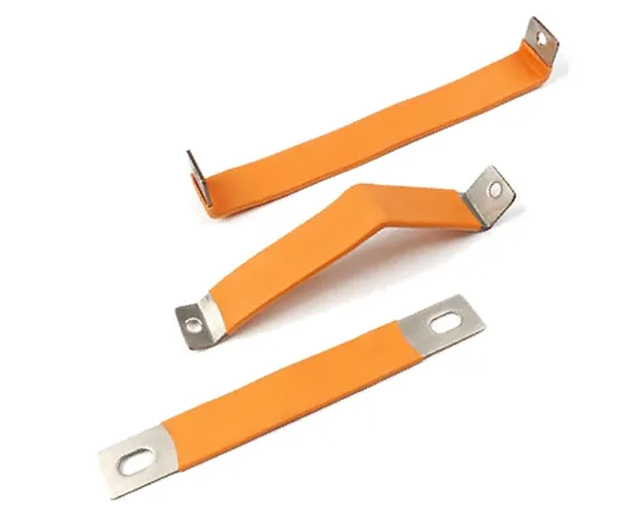
A laminated busbar is a type of electrical busbar composed of multiple layers of conductive materials, such as copper or aluminum, laminated with insulating layers. This layered construction enables low inductance, high current carrying capacity, and compact design, making it an ideal choice for modern electronic systems, EVs, and battery modules.
Copper Laminated Busbar: High conductivity, widely used in automotive, industrial, and battery systems.
Aluminium Laminated Busbar: Lightweight, cost-effective, suitable for large-scale power distribution.
Polyimide (PI)
PET film
Epoxy resin coatings
Tin plating
Nickel plating
Silver plating
The layers are pressed together under heat and pressure, creating a mechanically stable and electrically efficient conductor. Insulation layers prevent short circuits while allowing current to flow efficiently through the laminated structure.
High Current Capacity: Can carry large currents with minimal voltage drop.
Low Inductance & Low Resistance: Ideal for high-frequency and high-speed switching applications.
Compact & Lightweight Design: Reduces space requirements in complex systems.
Excellent Thermal Performance: Laminated layers help dissipate heat evenly.
Enhanced Reliability: Compared to traditional wiring or cable harnesses, laminated busbars reduce wiring errors and improve system safety.
| Parameter | Specification Range |
|---|---|
| Layer Thickness | 0.2 – 3.0 mm |
| Total Laminated Thickness | Up to 20 mm (customizable) |
| Width | 10 – 200 mm |
| Rated Current | Up to 5000 A (application dependent) |
| Voltage Rating | Up to 3000 V |
| Surface Treatment | Tin / Nickel / Silver plated |
| Insulation | PET / PI / Epoxy |
Laminated busbars are widely used across multiple industries due to their versatility and reliability:
EV Battery Systems: Flexible laminated busbars for series/parallel connections.
Energy Storage Systems (ESS): Compact, high-current distribution for batteries.
Industrial Power Modules: Power busbar for inverters and motor drives.
UPS & Data Centers: Efficient distribution in tight spaces.
Renewable Energy Systems: Solar inverters, wind power electronics.
Ensure proper torque for all connectors to maintain low resistance.
Avoid sharp bends beyond design limits for laminated Flexible Busbars.
Periodically inspect insulation for damage or wear.
Keep laminated busbars clean and free from moisture to prolong service life.
Proper installation and maintenance ensure maximum performance and reliability for high-current applications.
Q1: What is the difference between laminated busbars and traditional busbars?
A: Laminated busbars have multiple conductive layers separated by insulation, resulting in lower inductance, higher current capacity, and more compact design compared to traditional Solid Busbars.
Q2: Can laminated busbars be flexible?
A: Yes, laminated flexible busbars are available for applications requiring vibration absorption or thermal expansion.
Q3: What materials are commonly used in laminated busbars?
A: Copper and aluminum are the main conductors, with insulation layers made from PET, PI, or epoxy resin. Surface plating may include tin, nickel, or silver.
Q4: Are laminated busbars suitable for EV battery modules?
A: Absolutely. They provide high current capacity, compact design, and reliable electrical connections, making them ideal for EV Copper Busbar Connectors and battery systems.
A laminated busbar is a high-performance electrical conductor that combines multiple conductive layers with insulation to achieve efficient, safe, and compact power distribution. From EV battery systems to industrial power electronics, laminated busbars offer superior reliability, low inductance, and excellent thermal performance, making them a preferred solution for modern high-current applications.

Copyright © 2026 G AND N FORTUNE LIMITED All rights reserved.