


 English

Blog

2026-01-14 17:35:40
Copper Bus Bars are a critical component in modern electrical and power distribution systems. Understanding what is the resistance of a copper bus bar is essential for engineers, OEMs, and industrial buyers to ensure efficient power transmission, minimal energy loss, and safe operation of high-current systems. This article explains the factors affecting copper bus bar resistance, provides calculation methods, explores applications, and highlights key advantages.
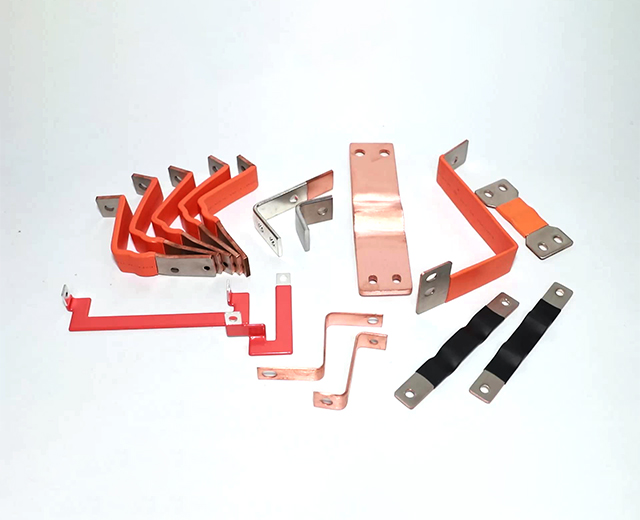
A copper bus bar is a solid or laminated conductor used to carry high currents in power systems, including switchgear, battery modules, EVs, and UPS systems. Its resistance depends on several factors, including material, cross-sectional area, length, and temperature.
The electrical resistance R of a copper bus bar can be calculated using the formula:
R=ρAL
Where:
R = resistance (Ω)
ρ = resistivity of copper (1.68×10⁻⁸Ω⋅m at 20°C)
L = length of the bus bar (m)
A = cross-sectional area (m²), i.e., width × thickness
This formula allows engineers to design high current busbar systems with minimal energy loss.
Pure copper has the lowest resistance and is widely used in laminated busbars and power busbar systems.
Copper alloys or copper-plated aluminum may slightly increase resistance.
Wider or thicker bus bars reduce resistance.
Longer bus bars increase resistance proportionally.
Copper’s resistance increases with temperature. The temperature coefficient of copper is approximately 0.00393/°C.
High-temperature applications require adjustments in design to maintain performance.
Plating such as tin, nickel, or silver primarily affects contact resistance in Electrical Busbar connectors, not the bulk resistance of the bus bar itself.
Consider a copper bus bar with the following specifications:
Length L=1m
Width W=50mm=0.05m
Thickness T=5mm=0.005m
The cross-sectional area:
A=W×T=0.05×0.005=0.00025m2
Resistance:
R=0.000251.68×10−8×1≈6.72×10⁻⁵Ω
This extremely low resistance demonstrates why copper bus bars are ideal for high current busbar applications.
For industrial and EV applications, laminated busbars are often used to further reduce resistance and inductance:
Multiple copper layers laminated with insulating material
Compact design allows low-resistance, high-current capacity
Supports electrical busbar connectors and flexible layouts for battery systems
Copper bus bars with low resistance are widely used in:
EV battery modules – high-efficiency connections for Battery Bus Bar connectors
Industrial power distribution – power busbar for switchgear and inverters
UPS and data centers – safe, compact power routing
Renewable energy systems – solar inverters, wind turbines
Laminated Flexible Busbars – absorbing vibration and thermal expansion
Low resistance ensures high efficiency, reduced heat generation, and reliable operation.
Minimal voltage drop across high-current systems
High efficiency for power electronics and EV modules
Improved thermal performance with reduced heating
Enhanced reliability in critical applications
Compact and customizable designs, especially with laminated busbars
Q1: What is a typical resistance for a copper bus bar?
A: For standard industrial bus bars, resistance is very low, usually in the range of micro-ohms to milliohms, depending on length, width, and thickness.
Q2: How does temperature affect bus bar resistance?
A: Resistance increases with temperature. For copper, the temperature coefficient is ~0.00393/°C.
Q3: Can laminated busbars reduce resistance?
A: Yes, laminated busbars reduce resistance and inductance, offering more compact and efficient high current busbar solutions.
Q4: What applications require low-resistance copper bus bars?
A: EV battery systems, UPS, industrial power distribution, renewable energy inverters, and any high-current electronics.

Copyright © 2026 G AND N FORTUNE LIMITED All rights reserved.