


 English

Blog

2026-01-21 17:46:53
Choosing the correct wire size from a battery to a busbar is a critical step in designing a safe and efficient power distribution system. Incorrect cable sizing can lead to overheating, voltage drop, energy loss, and even system failure.
This article explains what size wire from battery to busbar should be used, while also helping you understand what is a busbar, how an electric busbar system works, and when a Battery Busbar or custom Copper Busbar is a better solution than traditional cables.
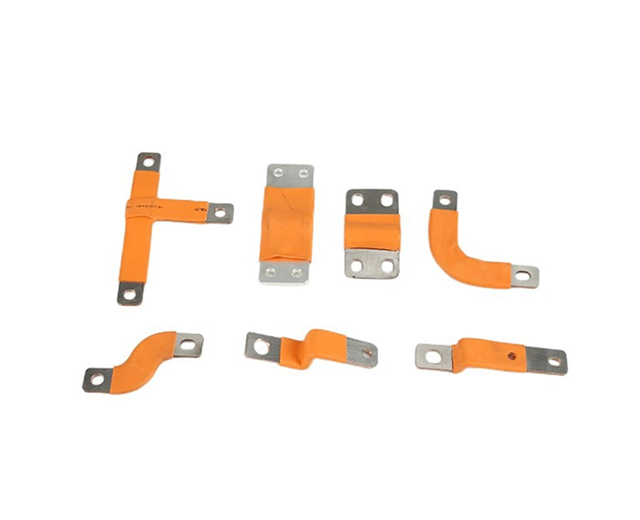
Before selecting wire size, it is important to understand what is a busbar.
A busbar (electrical bus bar) is a rigid or flexible conductor—typically made of copper or aluminum—used to distribute electrical power efficiently within a system. Compared with cables, a bus bar electric solution offers lower resistance, higher current capacity, and improved reliability.
Common types include:
Copper busbar / copper electrical busbar
Aluminium busbar
Laminated busbar
Custom busbars for specific applications
The cable connecting the battery to the busbar system carries the full system current. If undersized, it may cause:
Excessive heat generation
Voltage drop, especially in low-voltage systems
Reduced efficiency of the busbar power system
Safety risks in electrical panels or battery packs
Correct wire sizing ensures safe current transfer until power reaches the electrical panel bus bar or Battery Bus Bar copper assembly.
Current is the most important factor. Higher current requires a larger conductor cross-section.
Typical copper cable guidelines:
| Current (A) | Recommended Cable Size (mm²) |
|---|---|
| 50 A | 10 mm² |
| 100 A | 25 mm² |
| 150 A | 35 mm² |
| 200 A | 50 mm² |
| 300 A | 70 mm² |
| 400 A | 95 mm² |
For very high currents, engineers often replace cables entirely with a battery busbar or copper electrical busbar.
Low-voltage systems require larger wire sizes to minimize voltage drop:
12V systems → very thick cables required
24V systems → moderate cable size
48V busbar systems → commonly use 35–95 mm² cables
This is why electric busbar solutions are widely used in 48V and battery energy systems.
The longer the distance between battery and busbar, the larger the cable must be.
Best practice:
Keep battery-to-busbar distance as short as possible
Increase wire size if length exceeds 1 meter
Factors such as:
High ambient temperature
Enclosed electrical panels
Bundled cables
all require derating or selecting a larger wire size.
| Aspect | Cable | Busbar |
|---|---|---|
| Current Capacity | Medium | Very High |
| Voltage Drop | Higher | Very Low |
| Heat Dissipation | Limited | Excellent |
| Installation | Flexible | Structured |
| Reliability | Depends on crimp | Very High |
For currents above 200A, a battery busbar, laminated busbar, or custom copper busbar is usually more reliable than a single cable.
When connecting a cable to a busbar, a high-quality busbar connector is essential. Proper connectors ensure:
Low contact resistance
Secure mechanical fastening
Stable long-term performance
This is especially important in busbar power systems and electrical panel bus bar installations.
Copper busbar / Battery bus bar copper
Lower resistance
Smaller size for same current
Preferred for high-current systems
Aluminium busbar
Lightweight and cost-effective
Requires larger cross-section
Many copper bus bar manufacturers offer fully customized solutions to replace oversized cables.
If your system involves:
High current
Low voltage
Compact electrical panels
The best solution is often:
Short copper cable from battery → copper busbar → power distribution
This approach minimizes losses and improves system safety.
Q1: Can I connect the battery directly to a busbar without a cable?
Yes, in many designs a battery busbar is directly bolted to battery terminals using busbar connectors.
Q2: Is a laminated busbar better than a cable?
Yes. A laminated busbar reduces inductance, improves thermal performance, and is ideal for high-current or fast-switching systems.
Q3: Should I oversize the cable for safety?
Yes. Oversizing reduces heat, voltage drop, and improves system reliability.
Q4: Can wire size be reduced if I use a copper busbar?
Yes. Once current is transferred to a copper electrical busbar, cables can be shorter or eliminated entirely.

Copyright © 2026 G AND N FORTUNE LIMITED All rights reserved.