


 English

Blog

2026-04-09 15:21:30
When selecting materials for electrical systems, many people ask: is an electrical busbar brass or copper? The answer is important because the material directly affects conductivity, efficiency, and safety.
In most applications, an electrical busbar is made of copper or aluminum, while brass is rarely used due to its lower electrical performance.
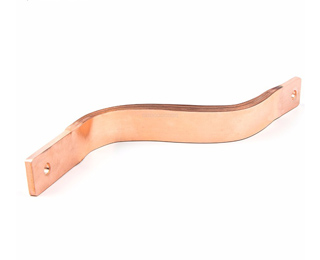
An electrical busbar (also known as a Copper Busbar or copper bus bar) is a metallic conductor used to distribute electricity within power systems.
It is widely used in:
Switchgear systems
Power distribution panels
Renewable energy systems
Electric vehicles (EV)
Industrial equipment
Common types include:
bare copper busbar
tin plated copper busbar
insulated copper busbar
Electrical busbars are typically made of copper, not brass.
Excellent conductivity
Low electrical resistance
High current-carrying capacity
Long-term reliability
In contrast, brass busbar is not commonly used in electrical systems.
Understanding the difference between copper busbar and brass helps explain why copper is the standard material.
| Property | Copper Busbar | Brass |
|---|---|---|
| Electrical Conductivity | ~100% IACS | 20%–30% IACS |
| Resistance | Low | High |
| Heat Generation | Minimal | Higher |
| Application | Power transmission | Small components |
Because of its high conductivity, copper busbar is ideal for efficient power distribution.
Although brass is a durable alloy, it is not suitable for electrical busbar applications.
Brass has significantly lower conductivity compared to electrolytic copper busbar, leading to energy loss.
Higher resistance causes overheating, which may affect system safety.
Busbars are designed for high current transmission, which brass cannot handle efficiently.
In real-world applications, busbars are made of:
High conductivity (≥100% IACS)
Reliable performance
Widely used by copper busbar manufacturers
Lower cost
Lightweight
Moderate conductivity
However, for high-performance systems, copper busbar remains the preferred choice.
Depending on the application, different types of copper busbar are used:
bare copper busbar – for general electrical systems
tin plated copper busbar – improved corrosion resistance
custom copper busbar – designed for specific applications
flexible copper busbar – used in dynamic or vibration environments
Professional copper busbar suppliers and copper busbar manufacturers often provide customized solutions.
A high-quality copper busbar is widely used in:
Power distribution systems
Electrical panels and switchgear
Solar and energy storage systems
EV battery systems
Industrial automation
When selecting a copper busbar supplier or product, consider:
Required conductivity
Current load capacity
Environmental conditions
Surface treatment (bare or plated)
Custom processing needs
Working with an experienced copper busbar manufacturer ensures compliance with international standards and reliable performance.
So, is an electrical busbar brass or copper?
Electrical busbars are mainly made of copper (or sometimes aluminum), not brass.
Due to its superior conductivity and efficiency, copper busbar is the industry standard for electrical power distribution. Brass, while useful for small components, is not suitable for high-current applications.

Copyright © 2026 G AND N FORTUNE LIMITED All rights reserved.