


 English

Flexible Copper Busbar
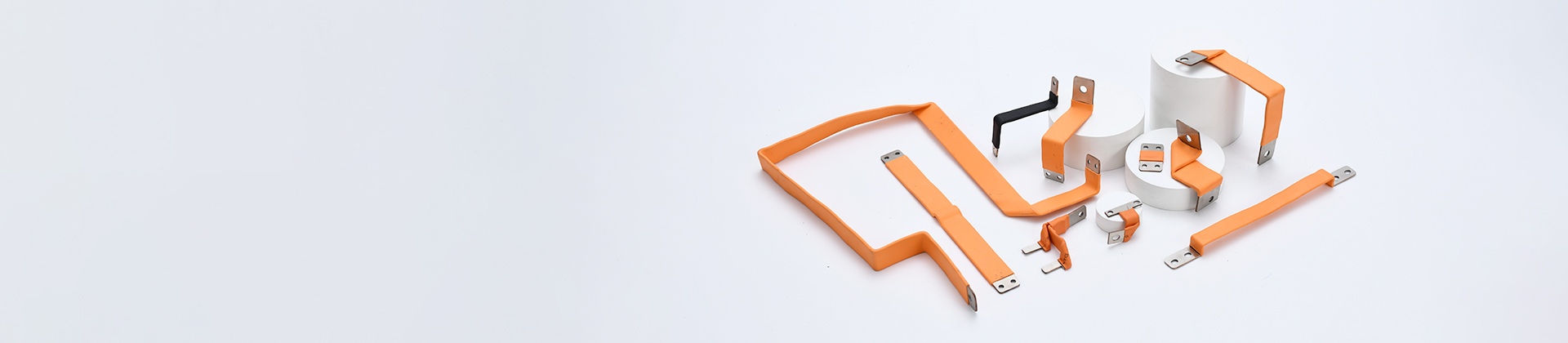
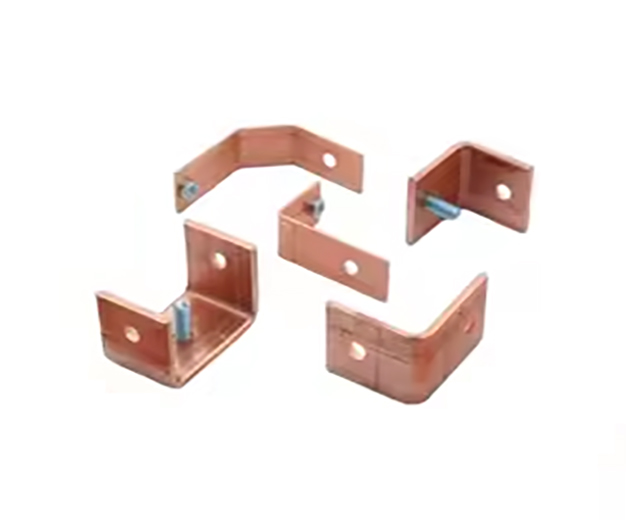
A Panel Board Copper Busbar is a high-conductivity copper strip or bar specifically designed for power distribution in panel boards, switchboards, and electrical panels. Its precise dimensions, rigid structure, and excellent electrical performance make it an ideal solution for industrial, commercial, and infrastructure power systems.
A busbar in a panel board is a conductive bar, typically made of copper, that distributes electrical power to multiple circuits within an electrical panel. By providing a low-resistance, high-current path, it ensures reliable operation and reduces power loss. Copper Busbars in electrical panels are preferred for their superior conductivity, mechanical strength, and thermal efficiency.
| Property | Specification |
|---|---|
| Material | High-conductivity Copper (≥ 98% IACS) |
| Resistivity | 1.7241 μΩ·cm at 20°C |
| Current Rating | 100A – 6300A (application-dependent) |
| Current Density | 1.0 – 2.5 A/mm² |
| Temperature Rating | 90°C continuous, 130°C short-term fault |
| Thermal Conductivity | 401 W/m·K |
| Tensile Strength | 200–250 N/mm² (hard-drawn copper) |
| Elongation | 15–35% |
| Surface Treatment | Bare, Tin-plated (3–5 μm), Silver-plated (5–8 μm) |
| Corrosion Resistance | Passes ASTM B117 salt spray test (500+ hrs tin-plated) |
Advantages:
High Conductivity: Up to 100% IACS, reducing power loss.
Mechanical Strength: Can withstand electromechanical forces up to 10 kN/m.
Short-Circuit Capacity: Handles up to 50 kA for 1 second without deformation.
Corrosion Resistance: Tin or silver plating extends service life in humid or marine environments.
Low Impedance: Maintains excellent performance at 50/60 Hz with skin effect factor <1.05.
Industrial Power Distribution: Supports motor control centers and power panels with ratings up to 5000A.
Data Centers: Used in N+1 busway architectures for high-reliability systems.
Renewable Energy Systems: Solar inverter panels and wind turbine installations with 150% overload capacity.
Marine & Offshore: Silver-plated copper busbars in IP66 enclosures for ships, oil rigs, and ports.
High-Rise Buildings: Vertical risers with compact copper busbar designs, maximizing space efficiency.
To connect a copper busbar to a PCB or panel board, follow these steps:
Determine the busbar distance from panel board – maintain clearance according to voltage and safety standards (typically 10–50 mm depending on insulation).
Use compatible mounting hardware – bolts, washers, and insulated spacers to secure the busbar.
Ensure proper torque – typically 20–50 N·m for M10 bolts.
Surface treatment – ensure contact areas are clean and plated (tin or silver) for optimal conductivity.
Electrical testing – check insulation resistance (>1 MΩ), contact resistance (<15 μΩ), and thermal performance.
Visual Inspection: Quarterly, for discoloration, corrosion, or distortion (>1 mm per 100 mm).
Torque Check: Annually, using calibrated tools.
Surface Cleaning: Biannually, with non-abrasive solvents (e.g., ≥99% isopropyl alcohol).
Electrical Testing: Insulation resistance, contact resistance, and partial discharge (for medium voltage).
Thermal Monitoring: Continuous IR scanning, alert if temperature rises 10°C above baseline.
The purpose of a copper busbar is to:
Efficiently distribute electrical power across multiple circuits.
Minimize power loss due to low resistivity.
Withstand short-circuit and electromechanical stresses.
Ensure long-term reliability in industrial, commercial, and infrastructure applications.
Copper Busbar for Panel Board – standard sizes and cross-sections.
Copper Busbar in Electrical Panel – fully insulated or bare.
High Conductivity Copper Busbar – for high-current applications.
Copper Busbar with Tin Plating – corrosion-resistant for humid or marine environments.
Custom Copper Busbar for Panel Board – tailored length, width, thickness, and plating.
Q1: What is a busbar in a panel board?
A1: A busbar in a panel board is a copper or metal strip used to distribute electrical power from the main supply to various circuits in an electrical panel. Copper busbars in electrical panels offer high conductivity, low resistivity, and mechanical strength, making them ideal for reliable current distribution.
Q2: What is the purpose of a copper busbar?
A2: The purpose of a copper busbar is to efficiently transfer electrical current across circuits, minimize power loss, withstand short-circuit conditions, and provide a compact, durable solution for panel boards and switchboards.
Q3: How much current can a Panel Board Copper Busbar carry?
A3: Depending on its cross-sectional area and design, copper busbars can carry from 100A to over 6300A, with a current density typically between 1.0 to 2.5 A/mm².
Q4: What is the distance of busbar from panel board?
A4: The distance (clearance) of a busbar from the panel board or other components depends on voltage, insulation, and safety standards. Typical spacing ranges from 10 mm to 50 mm, ensuring proper insulation and heat dissipation.
Q5: How to connect a busbar to a PCB or panel board?
A5: To connect a busbar:
Align the busbar with the mounting points on the panel board or PCB.
Use bolts, washers, and insulated spacers to secure it.
Apply proper torque (usually 20–50 N·m for M10 bolts).
Ensure the contact surfaces are clean and plated (tin or silver) for optimal conductivity.
Perform electrical tests like insulation resistance (>1 MΩ) and contact resistance (<15 μΩ).
Q6: Why is tin or silver plating used on copper busbars?
A6: Tin or silver plating enhances corrosion resistance, improves conductivity at contact points, and extends service life—especially in humid, marine, or corrosive environments.
Q7: Can Panel Board Copper Busbars be used outdoors?
A7: Yes. With proper insulation and plating (UV-resistant insulation, tin or silver plating), copper busbars are suitable for outdoor, marine, and industrial environments.
Q8: How often should a panel board busbar system be maintained?
A8:
Visual Inspection: Quarterly, checking for discoloration, corrosion, or distortion (>1 mm per 100 mm).
Torque Check: Annually, to ensure bolts are properly tightened.
Surface Cleaning: Biannually, using non-abrasive solvents like ≥99% isopropyl alcohol.
Electrical & Thermal Testing: Infrared scanning at least once per year and partial discharge testing for medium voltage systems.

Copyright © 2026 G AND N FORTUNE LIMITED All rights reserved.