


 English

Blog

2026-01-07 15:17:32
When people search for what is a busbar in a consumer unit, they are usually trying to understand how electricity is distributed inside a home or small commercial electrical panel. In simple terms, a busbar in a consumer unit is a key component that safely and efficiently distributes power from the main supply to all individual circuits.
This article explains what a busbar is in a consumer unit, how it works, what it is used for, and why it is essential for modern electrical installations.
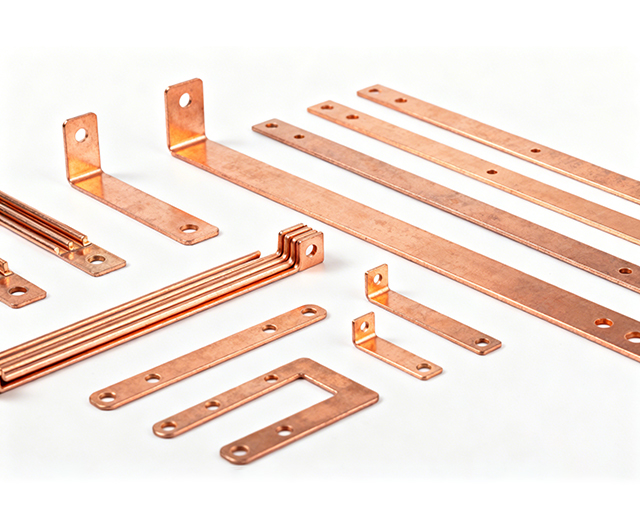
A busbar in a consumer unit is a metal conductor—most commonly made of copper—that connects the incoming power supply to multiple circuit breakers (MCBs or RCBOs). In electrical terms, if you are asking what is busbar in electrical distribution, the answer is that it acts as a central power distribution point.
Instead of wiring each breaker individually, the busbar delivers electricity evenly and reliably to all circuits in the consumer unit.
So, what does a busbar do inside a consumer unit?
Distributes electrical power from the main switch to each circuit breaker
Ensures consistent voltage across all outgoing circuits
Reduces wiring complexity, replacing multiple jumper wires
Improves safety by minimizing loose connections and overheating
This is why the busbar is considered the backbone of a consumer unit.
Many users also search what is a busbar used for or what is busbar used for in household systems. In a consumer unit, the busbar is used for:
Supplying power to lighting circuits
Feeding socket outlets
Connecting appliances such as ovens, air conditioners, and heaters
Supporting RCD, RCBO, and MCB protection systems
Without a busbar, power distribution would rely on complex and less reliable wiring.
To understand what is a busbar in electrical panels, it helps to see how it works step by step:
Power enters the consumer unit through the main switch.
The busbar connects directly to the supply side of each circuit breaker.
Each breaker draws power from the same busbar and distributes it to its assigned circuit.
In case of overload or fault, the breaker trips without affecting other circuits.
This design ensures both efficiency and protection.
The most common type in consumer units
Tooth-like structure connects multiple MCBs or RCBOs
Simple, reliable, and widely used
Uses solid pins to connect to breakers
Provides strong, stable electrical contact
Common in European-standard consumer units
Fork-shaped terminals clamp onto breaker terminals
Flexible for certain breaker designs
Each type serves the same purpose: safe and uniform power distribution.
In residential and commercial consumer units, busbars are typically made from:
Copper Busbar – excellent conductivity and reliability
Tin-plated Copper Busbar – improved corrosion resistance and longer service life
Aluminum Busbars are rarely used in consumer units because copper offers better stability and safety for indoor installations.
| Feature | Busbar | Individual Wires |
|---|---|---|
| Installation | Fast and organized | Time-consuming |
| Electrical Contact | Stable | Depends on workmanship |
| Heat Generation | Low | Higher risk |
| Safety | High | Lower |
| Maintenance | Easy | Difficult |
This comparison clearly shows why modern consumer units rely on busbars instead of wire jumpers.
Understanding what is a busbar in a consumer unit also explains why it is essential:
Enhances electrical safety
Reduces fire risk
Improves reliability of circuit breakers
Ensures compliance with modern electrical standards
Whether in a home, office, or small commercial building, a busbar is a critical component of safe power distribution.
What is a busbar in a consumer unit?
It is a copper conductor that distributes electricity from the main supply to multiple circuit breakers efficiently and safely.
By understanding what does a busbar do, what is busbar in electrical systems, and what is a busbar used for, homeowners, electricians, and engineers can better appreciate the importance of this small but essential component.

Copyright © 2026 G AND N FORTUNE LIMITED All rights reserved.