


 English

Blog

2026-01-16 08:57:23
Selecting the correct busbar size is a critical step in designing a safe, efficient, and reliable electrical system. Whether used in power distribution panels, EV battery systems, switchgear, or industrial equipment, proper busbar sizing directly affects current carrying capacity, temperature rise, electrical resistance, and system lifespan.
This article explains how to select busbar size step by step, covering key factors, calculation principles, material choices, and practical engineering considerations for B2B and industrial applications.
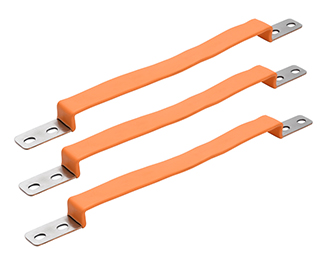
Busbar size typically refers to the cross-sectional dimensions of a busbar, including:
Width
Thickness
Cross-sectional area (mm²)
The busbar size determines how much current it can safely carry while maintaining acceptable temperature rise and low electrical resistance.
Incorrect busbar sizing can result in:
Overheating and insulation failure
Excessive power loss due to high resistance
Voltage drop and unstable system performance
Reduced equipment lifespan or safety risks
Correct busbar size selection ensures:
Safe current transmission
Low resistance and high efficiency
Compliance with IEC and UL standards
Long-term system reliability
The maximum continuous current is the primary factor when selecting busbar size.
A commonly used engineering guideline is current density:
Copper Busbar: 1.2 – 1.6 A/mm²
Aluminum Busbar: 0.8 – 1.2 A/mm²
Basic calculation formula:
Busbar cross-sectional area (mm²) = Rated current (A) ÷ Current density (A/mm²)
This provides an initial reference, which must be adjusted based on temperature rise and installation conditions.
High electrical conductivity
Lower resistance
Smaller size for the same current
Ideal for high-current and compact systems
Lightweight and cost-effective
Requires larger cross-section
Higher resistance compared to copper
For most high current busbar applications, copper is the preferred choice.
Busbar size must ensure that temperature rise stays within acceptable limits:
Typically ≤30°C for switchgear
Up to 50°C in certain enclosed environments
Higher allowable temperature rise requires:
Larger busbar size
Improved ventilation
Laminated busbar or insulated busbar designs
Cooling conditions significantly affect busbar sizing:
Open air installation → smaller busbar size
Enclosed cabinet → larger cross-sectional area
Forced air cooling → increased current capacity
Laminated busbars → improved heat dissipation
Environmental factors such as ambient temperature and enclosure design must be considered.
Busbar resistance increases with length and decreases with cross-sectional area.
In applications such as:
Battery energy storage systems
EV battery packs
DC power distribution
low resistance is critical to reduce voltage drop and power loss, making correct busbar sizing essential.
In power distribution systems, busbars must withstand short-circuit currents without mechanical deformation.
Factors influencing this include:
Busbar thickness
Mechanical strength
Support spacing
Short-circuit current level (kA) and duration
Oversizing the busbar improves short-circuit performance and system safety.
| Rated Current | Common Copper Busbar Size |
|---|---|
| 200 A | 20 × 5 mm |
| 400 A | 40 × 5 mm |
| 800 A | 80 × 5 mm |
| 1000 A | 100 × 5 mm |
Note: Actual busbar size selection should be verified based on standards, temperature rise, and installation conditions.
Using laminated busbars allows engineers to reduce overall busbar size while maintaining high current capacity.
Advantages include:
Lower inductance
Reduced resistance
Better thermal performance
Compact and lightweight design
Laminated busbars are widely used in:
EV power electronics
Inverters and converters
UPS systems
High-frequency switching applications
Electrical switchgear and control panels
Power distribution systems
EV and hybrid vehicle battery systems
Renewable energy inverters
Industrial automation equipment
High-current DC systems
Q1: Can I oversize a busbar?
Yes. Oversizing reduces temperature rise and resistance but increases cost and space requirements.
Q2: Is copper always better than aluminum?
Copper offers better conductivity and compact design, while aluminum is chosen for cost and weight advantages.
Q3: Do laminated busbars allow smaller sizes?
Yes. Laminated busbars improve electrical and thermal efficiency, enabling compact designs.
Q4: Are there standards for busbar size selection?
Yes. Common references include IEC 61439, UL 508A, and IEEE guidelines.

Copyright © 2026 G AND N FORTUNE LIMITED All rights reserved.