


 English

Blog

2026-04-15 15:58:43
In electrical systems, copper is widely used due to its excellent conductivity. However, many engineers and buyers often ask: why must Copper Bus Bar be tin plated finishing?
While bare Copper Busbar offers high conductivity, it is prone to oxidation and corrosion over time. To improve performance and reliability, tin plated copper busbar has become a standard solution in many industries such as power distribution,new energy industry, and industrial equipment.
In this article, we will explain the importance of tin plating for Copper Busbars and when it is necessary.
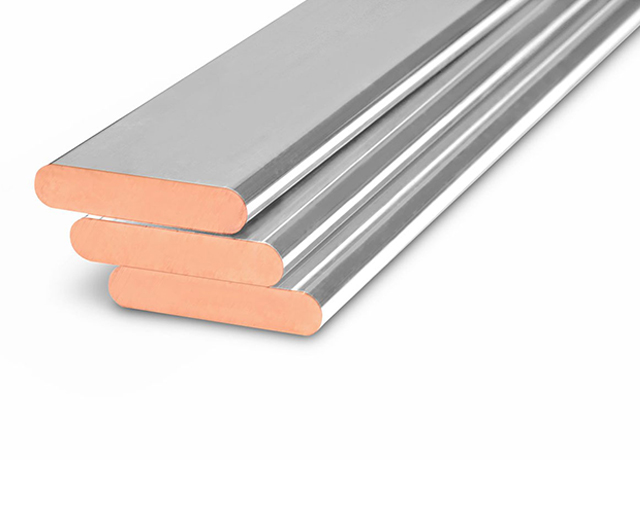
A tin plated copper busbar is a copper conductor coated with a thin layer of tin through electroplating or hot-dip processes.
This busbar surface treatment enhances the performance of copper by protecting it from environmental factors and improving electrical connections.
Copper naturally reacts with oxygen in the air, forming an oxide layer on its surface.
Oxidation increases resistance
Reduces conductivity at connection points
Affects long-term performance
Tin plating creates a protective barrier, preventing direct contact with air and moisture.
In electrical systems, busbars are often connected using bolts or terminals.
Bare copper can oxidize at contact points
This leads to higher contact resistance and heat generation
Tin plated copper busbar provides stable and low-resistance connections, improving safety and efficiency.
In harsh environments such as:
High humidity
Coastal or marine areas
Industrial environments with chemicals
Bare copper may corrode quickly.
Tin plating significantly enhances corrosion resistance, extending the lifespan of the busbar.
When copper busbars are connected with other metals (such as aluminum or steel), galvanic corrosion may occur due to different electrochemical potentials.
Tin plating acts as an intermediate layer, reducing this risk and ensuring stable connections between dissimilar metals.
For applications requiring welding or soldering:
Bare copper is harder to solder after oxidation
Tin-coated surfaces are easier to process
Tin plated copper busbars offer better solderability and manufacturing efficiency
By combining oxidation resistance, corrosion protection, and stable conductivity:
Tin plated copper busbars last significantly longer than bare copper busbars, especially in demanding applications.
| Feature | Bare Copper Busbar | Tin Plated Copper Busbar |
|---|---|---|
| Conductivity | Excellent | Slightly lower but stable |
| Oxidation Resistance | Poor | Excellent |
| Corrosion Resistance | Moderate | High |
| Contact Performance | Unstable over time | Stable and reliable |
| Maintenance | Higher | Lower |
Using a tin plated copper busbar is highly recommended in:
Power distribution systems
Switchgear and control panels
Renewable energy systems (solar, energy storage)
EV battery systems
Outdoor or humid environments
Not all applications require tin plating.
A bare copper busbar may be suitable for:
Dry indoor environments
Short-term or low-cost projects
Systems with minimal environmental exposure
However, for long-term reliability and safety:
Tin plated copper busbar is the preferred choice in most industrial applications
At JeaSnn, we specialize in manufacturing High-Quality Copper Busbars with advanced tin plating finishing:
Precision cutting, bending, and punching
Uniform tin coating for better conductivity
Custom dimensions and designs
Suitable for power systems,new energy industry, and industrial equipment
Slightly, but the impact is minimal. The benefit of stable contact resistance outweighs the small loss.
Typically ranges from 3–20 μm depending on application requirements.
Yes, it performs much better than bare copper in outdoor and humid environments.
Yes, it increases lifespan and reduces maintenance, making it cost-effective in the long run.

Copyright © 2026 G AND N FORTUNE LIMITED All rights reserved.