


 English

Blog

2026-04-17 10:30:05
In modern electrical systems, flexibility and reliability are becoming increasingly important. This leads many engineers and buyers to ask: what are Flexible Copper Busbars used for?
A flexible Copper Busbar is designed to provide efficient electrical conductivity while allowing movement, vibration absorption, and thermal expansion. Compared with rigid busbars, it offers greater adaptability in complex installations.
In this article, we will explore the key uses, advantages, and applications of flexible copper busbars.
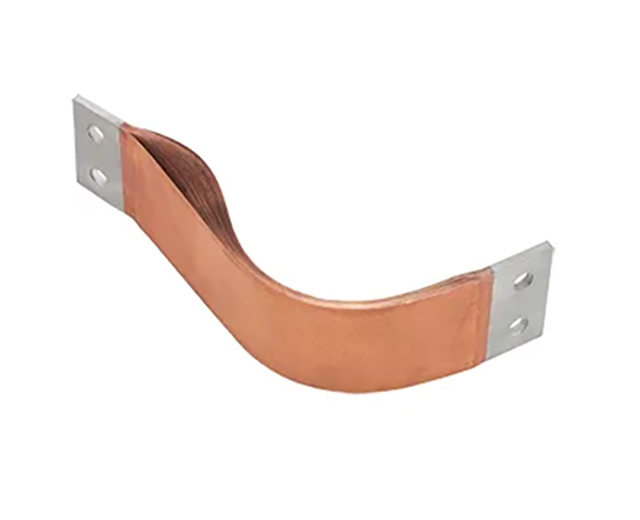
A flexible copper busbar is typically made of multiple layers of thin copper foils laminated or braided together. This structure allows the busbar to bend and flex without compromising electrical performance.
Common types include:
Laminated copper busbar
Braided copper busbar
Flexible Busbar connector
These designs are widely used where traditional rigid busbars are not suitable.
In many electrical systems, equipment generates vibration during operation, such as:
Motors
Generators
Industrial machinery
A rigid connection may loosen or crack over time.
A flexible copper busbar can absorb vibration, protecting connection points and improving system reliability.
In real installations, components are not always perfectly aligned.
Installation tolerances
Equipment movement during operation
A flexible busbar connector allows slight movement without creating mechanical stress.
Electrical systems generate heat when carrying current, causing metal expansion.
Rigid busbars may deform or create stress
Connections may loosen over time
Flexible copper busbars compensate for thermal expansion and contraction, maintaining stable connections.
In compact or irregular layouts:
Space may be limited
Multiple connection angles are required
A laminated copper busbar can be easily bent or shaped to fit complex designs.
Flexible copper busbars are widely used in:
Battery packs (EV and energy storage)
Battery Busbar connections
High-current flexible connections
Electrical panels
Switchgear systems
Transformer connections
Battery modules
Power electronics connections
Welding machines
Heavy machinery
Renewable energy systems
Compared with rigid busbars, flexible copper busbars offer several advantages:
Excellent electrical conductivity
High flexibility and easy installation
Vibration resistance
Reduced mechanical stress
Longer service life
Suitable for dynamic environments
| Feature | Flexible Copper Busbar | Rigid Copper Busbar |
|---|---|---|
| Flexibility | High | None |
| Vibration Resistance | Excellent | Low |
| Installation | Easy | Limited |
| Mechanical Strength | Moderate | High |
| Application | Dynamic systems | Fixed systems |
When selecting a flexible copper busbar, consider:
Current carrying capacity
Thickness and number of copper layers
Type (laminated or braided)
Installation space and bending requirements
Surface treatment (e.g., tin plated copper busbar)
Choosing the right design ensures optimal performance and safety.
At JeaSnn, we provide customized flexible copper busbar solutions for various industries:
Laminated and braided copper busbars
Custom shapes, sizes, and hole patterns
Tin plated copper busbar for better corrosion resistance
Designed for battery systems, power distribution, and industrial equipment
Laminated busbars use stacked copper foils, while braided busbars use woven copper wires. Laminated types are more common for high-current applications.
Yes, especially laminated copper busbars, which are designed for high current carrying capacity.
In many applications, yes. They offer lower resistance and better heat dissipation compared to cables.
Yes, options like tin plated copper busbar improve corrosion resistance and durability.

Copyright © 2026 G AND N FORTUNE LIMITED All rights reserved.