


 English

Blog

2026-04-17 10:53:03
When designing electrical systems, one of the most common questions is: what grade of copper is used in busbars?
Choosing the right Copper Busbar material is critical because it directly affects conductivity, durability, and overall system performance. In most applications, high-conductivity copper grades such as C11000, T1 copper, and T2 copper are widely used.
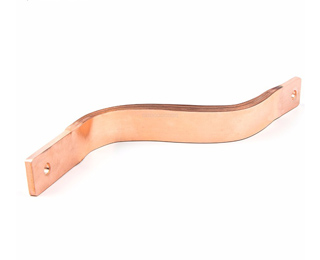
A Copper Busbar is a key component in electrical systems, responsible for efficiently distributing current. Copper is preferred because of its:
Excellent electrical conductivity
High thermal conductivity
Strong mechanical properties
Good corrosion resistance
These properties make copper the ideal busbar material for power distribution, industrial equipment, and energy systems.
C11000 copper busbar (Electrolytic Tough Pitch copper) is the most commonly used grade worldwide.
Copper content: ≥99.9%
Conductivity: ~100% IACS
Good balance between performance and cost
This is the standard choice for most copper busbar applications.
T2 copper is the Chinese standard equivalent of C11000 and is widely used in manufacturing.
High conductivity and stability
Excellent processing performance
Cost-effective for large-scale production
T2 copper busbar is used in over 90% of standard electrical applications.
T1 copper is a higher-grade material with lower oxygen content and higher purity.
Copper content: ≥99.95%
Better conductivity than T2
More stable in demanding environments
T1 copper busbar is ideal for high-performance applications such as:
Energy storage systems
Precision electrical equipment
High-current applications
| Feature | T1 Copper | T2 Copper |
|---|---|---|
| Purity | Higher | High |
| Conductivity | Slightly better | Excellent |
| Cost | Higher | More economical |
| Application | High-end systems | General use |
T2 copper is sufficient for most projects, while T1 copper is recommended for high-reliability applications.
When selecting the copper grade for busbar, consider the following:
Required conductivity
Operating environment
Current load
Budget constraints
For most applications:
T2 copper busbar (C11000) is the best balance of cost and performance.
For demanding conditions:
T1 copper busbar provides higher purity and reliability.
In addition to material selection, surface treatment plays an important role.
Many manufacturers offer tin plated copper busbar to:
Prevent oxidation
Reduce contact resistance
Improve corrosion resistance
Combining the right copper grade with proper finishing ensures optimal performance.
At JeaSnn, we provide high-quality Custom Copper Busbar solutions tailored to your needs:
Made of high-quality T1, T2 copper material
Compliant with BS standards and support for customisation
Precision cutting, bending, and punching
Tin plated copper busbar options available
Suitable for power distribution, energy storage, and industrial applications
We are committed to delivering reliable products and consistent quality:
We are certified according to ISO 9001:2015
Strict quality control throughout production
Custom designs based on your drawings or requirements
C11000 (T2 copper) is the most commonly used due to its high conductivity and cost-effectiveness.
Yes, T1 copper has higher purity and slightly better performance, but it is more expensive.
Yes, custom copper busbars can be manufactured based on size, shape, and application requirements.
In many cases, yes. Tin plated copper busbars improve durability and reduce maintenance.

Copyright © 2026 G AND N FORTUNE LIMITED All rights reserved.