


 English

Blog

2026-05-26 11:30:44
As electric vehicles and energy storage technologies continue to develop rapidly, battery safety, efficiency, and reliability have become increasingly important. One of the key components inside modern battery packs is the Cell Contact System (CCS). The CCS plays a critical role in electrical connection, signal transmission, and battery management within lithium battery modules and packs.
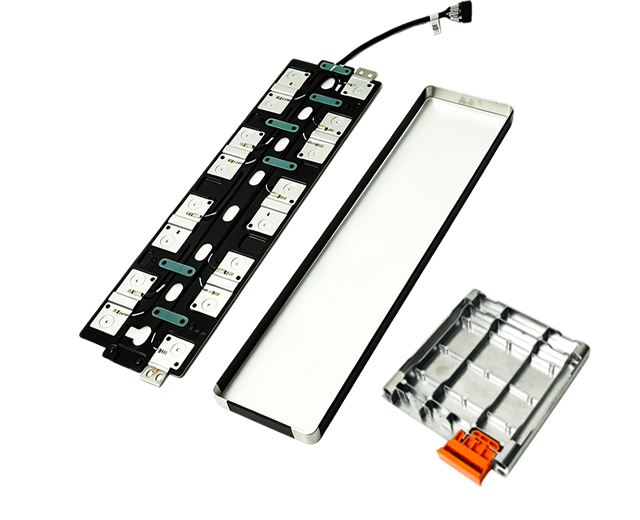
A cell contact system is an integrated electrical connection solution used inside lithium-ion battery packs. It connects battery cells and transfers voltage and temperature signals to the Battery Management System (BMS). A CCS is also commonly called a battery cell contacting system or cell contacting system in the new energy industry.
The main purpose of the CCS is to ensure stable current transmission, accurate signal collection, and safe operation of battery systems used in electric vehicles and energy storage equipment.
A typical battery cell contacting system usually includes:
Busbar
Signal acquisition components
FPC or wire harness
Connectors
Temperature sensing elements
Insulation materials
Among these parts, the busbar is one of the most important conductive components.
Different battery applications require different busbar structures and materials.
A copper busbar offers excellent electrical conductivity and low resistance. It is widely used in high-current EV battery CCS applications because it improves energy efficiency and reduces heat generation.
An Aluminum Busbar is lightweight and cost-effective. It is commonly used in battery packs where weight reduction is important, especially in electric vehicles and portable energy systems.
A flexible busbar is designed to absorb vibration and compensate for thermal expansion inside battery packs. Flexible laminated structures help improve durability and connection reliability.
A solid busbar provides strong mechanical strength and stable electrical performance. It is often used in fixed battery modules and industrial power systems.
An EV battery CCS connects multiple battery cells in series or parallel configurations. During operation, the system continuously collects voltage and temperature data from each cell and sends the information to the BMS.
The BMS then monitors battery performance, balances cells, and protects the battery pack from overcharging, overheating, and short circuits. A high-quality cell contact system helps improve battery safety, assembly efficiency, and long-term performance.
The Volfinity cell contacting system is an advanced CCS solution developed for modern EV battery production. It uses flexible contact technology to simplify battery module assembly and reduce wiring complexity.
Compared with traditional battery connection methods, the Volfinity system can improve manufacturing efficiency, reduce installation time, and support automated battery production processes.
Today, battery cell contacting systems are widely used in many industries, including:
Electric vehicles (EV)
Hybrid vehicles
Energy storage battery system
Solar energy storage
Industrial power equipment
Charging infrastructure
As battery technology continues to evolve, CCS solutions are becoming more compact, lightweight, and intelligent.
Modern cell contacting systems provide several important benefits:
Improved electrical conductivity
Enhanced battery safety
Faster battery assembly
Better thermal management
Reduced wiring complexity
Higher reliability for high-current applications
By combining advanced busbar, sensing, and connection technologies, CCS solutions help optimize the overall performance of battery packs
The Cell Contact System (CCS) is an essential component in modern lithium battery packs and energy storage systems. Whether using a copper busbar, aluminum busbar, flexible busbar, or solid busbar, a well-designed CCS ensures safe, efficient, and reliable battery operation.
With the rapid growth of EV and renewable energy industries, demand for advanced battery cell contacting systems and EV battery CCS solutions will continue to increase in the global market.

Copyright © 2026 G AND N FORTUNE LIMITED All rights reserved.