


 English

Blog

2026-06-04 16:25:11
As electric vehicles (EVs), Energy Storage Systems (ESS), and battery-powered devices continue to evolve, the Cell Contact System (CCS) has become an essential component in modern battery packs. A CCS not only provides reliable electrical connections between battery cells but also integrates voltage sensing, temperature monitoring, and communication with the Battery Management System (BMS).
In this article, we'll explain how a Cell Contact System works, its key components, and why it is critical for battery performance and safety.
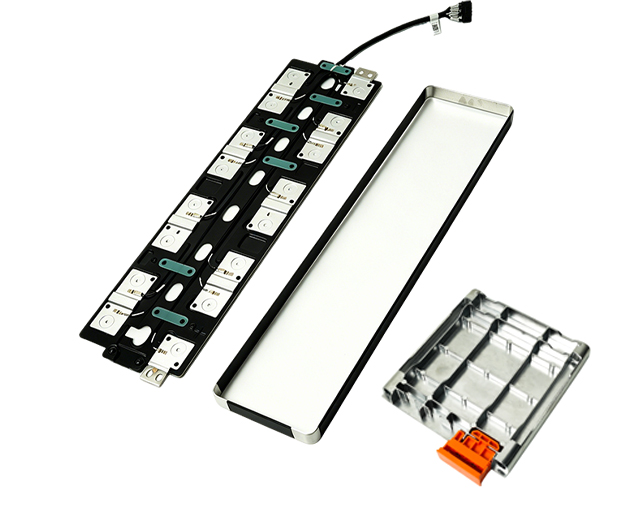
A Cell Contact System (CCS) is an integrated Battery Connection solution that combines Busbars, flexible circuits, sensing lines, connectors, and temperature sensors into a single assembly. It is designed to connect battery cells while enabling real-time monitoring and communication with the BMS.
Compared with traditional wiring harnesses and standalone Busbars, a CCS offers:
Higher integration
Reduced assembly time
Lower weight
Improved reliability
Enhanced battery safety
Today, cell contact systems are widely used in EV battery modules, battery packs, and energy storage applications.
A typical Cell Contact System consists of:
Busbars are responsible for carrying high current between battery cells. They are typically made from copper or aluminum and are designed to minimize electrical resistance.
The FPC integrates voltage sensing circuits and signal transmission pathways. It helps reduce wiring complexity and saves installation space.
NTC temperature sensors are installed near battery cells to continuously monitor operating temperatures.
Connectors provide communication between the CCS and the Battery Management System.
The carrier structure secures all components and provides electrical insulation.
The working principle of a Cell Contact System can be divided into four major functions.
The primary role of a CCS is to connect battery cells through busbars.
For example, in a battery module:
Cell 1 → Busbar → Cell 2 → Busbar → Cell 3
The busbars create either series or parallel connections depending on the battery design.
During charging and discharging:
Charging current flows through the busbars into the cells.
Discharging current flows from the cells through the busbars to the load.
This ensures efficient power transfer throughout the battery pack.
A modern Cell Contact System integrates voltage sensing circuits within the FPC.
Each battery cell is connected to a sensing point that measures individual cell voltage.
The collected voltage data is transmitted to the BMS, allowing it to:
Monitor cell balance
Detect overvoltage conditions
Detect undervoltage conditions
Improve battery lifespan
Accurate voltage monitoring is essential for safe battery operation.
Temperature is one of the most important factors affecting battery performance and safety.
CCS assemblies include multiple temperature sensors positioned throughout the battery module.
These sensors continuously monitor cell temperatures and send data to the BMS.
If abnormal temperatures are detected, the system can:
Activate cooling systems
Reduce charging current
Limit discharge power
Trigger safety protection mechanisms
This helps prevent overheating and thermal runaway events.
The CCS acts as the communication bridge between battery cells and the BMS.
The system collects:
Voltage data
Temperature data
Cell status information
The BMS then uses this information to perform:
State of Charge (SOC) calculations
State of Health (SOH) monitoring
Cell balancing
Fault diagnosis
Safety protection
Without a reliable Cell Contact System, the BMS would be unable to accurately manage battery performance.
Modern battery manufacturers increasingly prefer integrated Cell Contact Systems because they provide several benefits:
Integrated designs reduce the number of separate wires and connectors, minimizing potential failure points.
Using FPC technology instead of traditional wire harnesses lowers overall battery pack weight.
Pre-assembled CCS modules simplify battery manufacturing and improve production efficiency.
Continuous monitoring of voltage and temperature helps prevent battery failures and improves operational safety.
Compact CCS designs allow more efficient battery pack layouts.
Cell Contact Systems are commonly used in:
Electric Vehicles (EVs)
Hybrid Vehicles (HEVs)
Energy Storage Systems (ESS)
Battery Energy Storage Systems (BESS)
Commercial Electric Buses
Power Tools
Industrial Battery Packs
As battery technology advances, demand for high-performance Cell Contact Systems continues to grow.
A Cell Contact System works by combining power transmission, voltage sensing, temperature monitoring, and communication functions into a single integrated assembly. Through busbars, FPC circuits, sensors, and connectors, the CCS enables accurate battery monitoring and efficient interaction with the Battery Management System.
By improving safety, reliability, and manufacturing efficiency, Cell Contact Systems have become a critical component in modern electric vehicle and energy storage battery solutions.

Copyright © 2026 G AND N FORTUNE LIMITED All rights reserved.