


 English

Blog

2026-06-04 16:28:54
A busbar is a critical electrical component used to conduct and distribute power efficiently within electrical systems. Compared with traditional cables and wire harnesses, busbars provide lower resistance, improved current-carrying capacity, and a more compact design. They are widely used in power distribution systems, electric vehicles, battery packs, renewable energy systems, and industrial equipment.
In this article, we'll explore what a busbar is used for, its advantages, common types, and key applications.
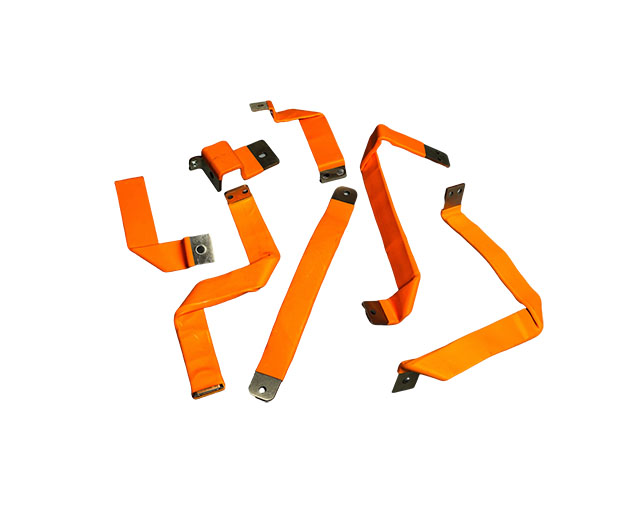
A busbar is a metallic conductor, typically made from copper or aluminum, designed to collect, distribute, and transmit electrical power within a system. It serves as a central connection point that allows electricity to flow efficiently between power sources and electrical loads.
Depending on the application, busbars can be manufactured in various shapes and configurations, including rigid bars, Flexible Busbars, and laminated busbars.
Busbars are used wherever large amounts of electrical current need to be distributed safely and efficiently. Their primary functions include:
One of the most common uses of a busbar system is power distribution. In electrical panels and switchgear, busbars distribute electricity from incoming power sources to multiple outgoing circuits.
Benefits include:
Lower energy loss
Simplified wiring
Improved reliability
Easier maintenance
In modern electric vehicles and energy storage systems, Battery Busbars are used to connect battery cells in series or parallel configurations.
Busbars help:
Transfer high current efficiently
Reduce resistance between cells
Improve battery performance
Support compact battery designs
Many EV battery packs now utilize Cell Contact Systems (CCS) that integrate busbars, sensing circuits, and temperature monitoring into a single assembly.
Solar and wind power installations use busbars to collect and distribute generated electricity.
Applications include:
Solar inverters
Battery energy storage systems
Power conversion systems
DC distribution networks
A properly designed copper busbar or Aluminum Busbar helps maximize system efficiency and reduce energy losses.
Industrial machinery often requires high-current electrical connections. Busbars are commonly used in:
Manufacturing equipment
Motor control centers
Welding systems
Automation systems
Their ability to carry large currents makes them ideal for demanding industrial environments.
Data centers require stable and efficient power distribution to support critical IT infrastructure.
Busbars are used in:
Uninterruptible Power Supply (UPS) systems
Server power distribution
Power distribution units (PDUs)
Compared with traditional cable systems, busbars improve energy efficiency and reduce installation complexity.
A copper busbar offers excellent electrical conductivity and high current-carrying capacity. It is commonly used in applications where performance and reliability are critical.
Advantages:
Low electrical resistance
High thermal conductivity
Excellent durability
An aluminum busbar provides a lightweight and cost-effective alternative to copper.
Advantages:
Lower weight
Reduced material cost
Good corrosion resistance
A laminated busbar consists of multiple conductive layers separated by insulating materials.
Benefits include:
Reduced inductance
Improved electromagnetic performance
Compact design
Laminated busbars are widely used in EVs, power electronics, and renewable energy systems.
A flexible busbar is designed to accommodate movement, vibration, and thermal expansion.
Applications include:
Battery packs
Electric vehicles
Industrial power systems
Busbars provide lower resistance than conventional cables, helping reduce energy losses.
A well-designed busbar assembly can safely carry large amounts of current without excessive heating.
Busbars require less space than multiple cable connections, resulting in cleaner and more organized electrical systems.
Fewer connection points reduce the risk of loose connections and electrical failures.
Busbar systems simplify inspection, troubleshooting, and system upgrades.
Today, busbars are widely used in:
Electric Vehicles (EVs)
Hybrid Vehicles (HEVs)
Battery Energy Storage Systems (BESS)
Solar Energy Systems
Wind Power Systems
Switchgear and Control Panels
Data Centers
Industrial Automation Equipment
Rail Transportation Systems
As electrification continues to expand globally, the demand for advanced busbar assemblies and battery busbar systems is expected to grow rapidly.
When selecting a busbar, engineers typically consider:
Current rating
Voltage level
Material (copper or aluminum)
Thermal performance
Space limitations
Environmental conditions
Working with an experienced busbar manufacturer can help ensure optimal performance and long-term reliability.
So, what is a busbar used for? A busbar is used to efficiently conduct, collect, and distribute electrical power in a wide range of applications, from power distribution panels and industrial equipment to electric vehicles and battery energy storage systems.
Whether it's a copper busbar, aluminum busbar, laminated busbar, or flexible busbar, these components play a vital role in modern electrical infrastructure by improving efficiency, reducing wiring complexity, and enhancing system reliability.

Copyright © 2026 G AND N FORTUNE LIMITED All rights reserved.